
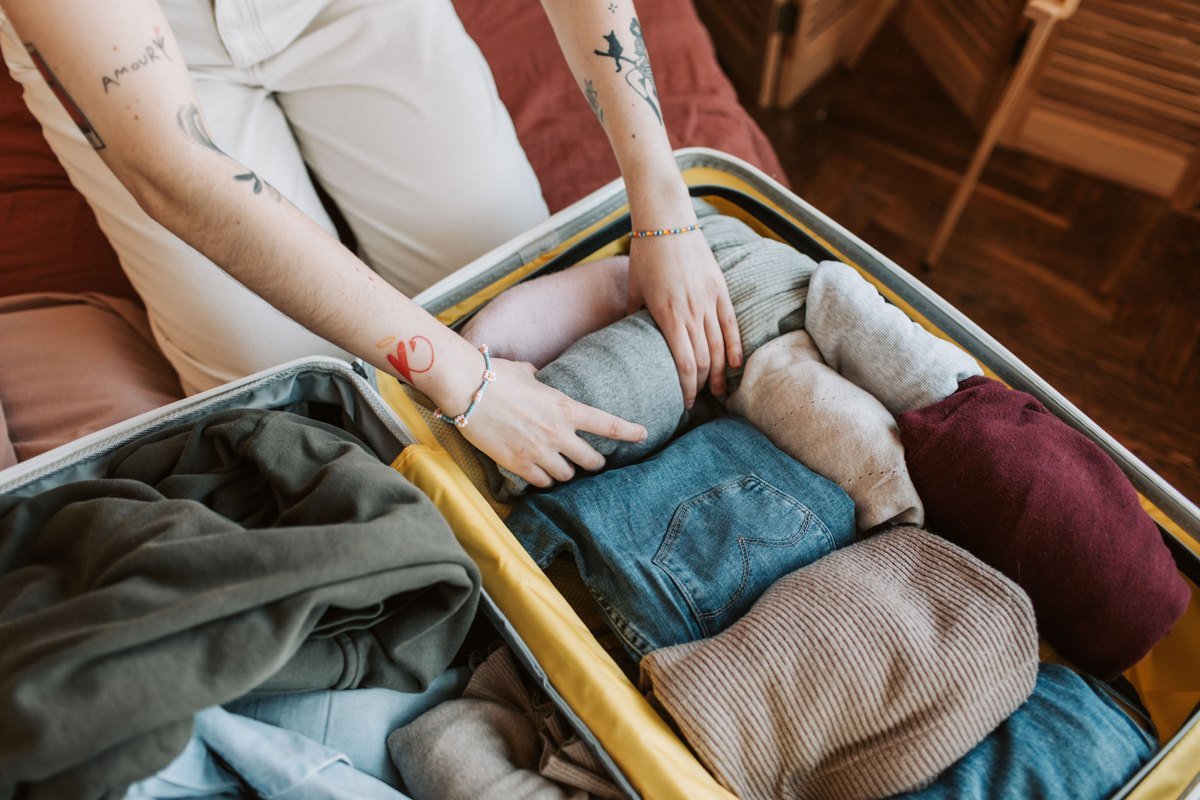
Real packing photograph: Vlada Karpovich, 2021, used under the Pexels licence.
A good weekend packing list leaves room for the trip itself. For a two-night city break, you usually need a small set of clothes that work together, comfortable shoes and a few everyday essentials. You rarely need a different outfit for every stop.
The quick two-night packing checklist
Start here: wear your bulkiest shoes and jacket, pack two tops and one spare bottom, then add sleepwear, underwear, toiletries, medication, travel documents and charging equipment. Leave a little space for wet layers or something you bring home.
| Category | A useful starting amount | What to check |
|---|---|---|
| Clothes | 2 tops, 1 spare bottom, sleepwear | Each top should work with your travel outfit |
| Underwear and socks | One clean set per day, plus a spare if useful | Add more for exercise or wet weather |
| Outer layer | 1 suitable jacket | Rain, wind and evening temperatures |
| Shoes | 1 comfortable pair worn; optional spare | Your actual walking and dinner plans |
| Small essentials | Toiletries, medication, phone and charger | Keep time-sensitive items easy to reach |
Choose the bag after checking your transport
Check the allowance attached to your booking before choosing a suitcase or backpack. A personal item and a cabin bag are not always the same allowance. Dimensions, weight limits and included bags can differ between fares, even with the same airline.
For a train or road trip, lifting and carrying the bag still matters. Pick something you can manage on stairs and crowded pavements. A bag that fits everything at home may feel very different after twenty minutes of walking.
Put the packed bag on a scale if your journey has a weight limit. Measure it with wheels, handles and filled outer pockets included. Do this before the final evening, when changing bags is still easy.
Build three days around a small clothing capsule
Choose two or three colours so that your clothes work together. Wear one bottom while travelling and pack another. Two tops, a light layer and your travel outfit can cover sightseeing, breakfast and an informal dinner without three separate outfits.
If you have booked a dressier restaurant, read its dress guidance first. Add one suitable item instead of an entire second wardrobe. Avoid taking shoes that you have never walked in: a short weekend is a poor time to discover blisters.
Lay everything out before packing. Remove any item that only works with something you are not bringing. Keep the clothes you expect to wear first near the top, and put dirty laundry in a separate washable bag.
Keep toiletries and health essentials simple
Bring the products you actually use each morning and evening. A toothbrush, toothpaste, deodorant and a small skin-care set are usually more useful than a large collection of backup bottles. Pack liquids in a sealed pouch to protect your clothes from leaks.
Check the rules for your departure and return airports if you are flying. Do not assume that a different scanner means your usual liquids bag is unnecessary. Security guidance and airline baggage rules are separate checks.
Keep essential medication accessible, with any documentation you need for the journey. Bring enough for your plans and consider possible delays. If a medicine needs special storage or destination approval, confirm those requirements before leaving.
Pack a small pouch for documents and technology
Keep your identification, tickets, payment cards and booking details together. Save offline copies of your hotel address and transport reservations. Your phone may have poor reception, run out of charge or lose access to an app when you need it.
A phone, charging cable and suitable plug adapter may be all the technology you need. Check your accommodation’s facilities before adding a laptop or extra camera equipment. For power banks, check the carrier’s current battery rules and permitted placement.
Keep private documents out of public photographs. A packing photo can help you remember what you brought, but cover passport numbers, booking codes and addresses before sharing it online.
Change the list for autumn events and winter markets
For an autumn walking weekend, prioritise a rain layer and shoes with useful grip. A compact umbrella can help, but it should not replace suitable clothing. For an October route with plenty of walking, see our Salem day-trip guide from Boston before deciding what to carry.
Winter needs a different approach. Add a warm base layer, gloves, a hat and weather-appropriate footwear. Wear the bulky coat during travel where practical. Our Québec City Christmas-market weekend itinerary explains how to build indoor breaks into a cold-weather visit.
If a Halloween trip includes a quiet evening at your accommodation, an optional printable activity takes little luggage space. Our shop’s The Midnight Visitor printable Halloween mystery game on Etsy is a paid digital option. Check the listing’s printing and play requirements before travelling; it is not a physical travel kit.
Do a ten-minute check before departure
Review the weather forecast, the next day’s route and your hotel check-in time. Confirm that you can reach your medication, documents and charger without unpacking the whole bag. Fill any gaps that matter, then stop adding items “just in case.”
Leave your first day’s walking layer easy to reach. Keep a small snack and an empty refillable bottle where permitted. If you plan to shop, leave space rather than relying on an extra bag that your transport may not allow.
Frequently asked questions
How many outfits do I need for a two-night trip?
Your travel outfit plus two interchangeable tops and one spare bottom is a useful starting point. Add clothing for specific activities, weather or a dress code instead of packing an extra outfit for every meal.
Can I pack for a weekend in a backpack?
Often, yes. The answer depends on your clothes, weather, equipment and bag allowance. Test the packed bag at home and check that its dimensions and weight meet your booking’s rules.
Should I roll or fold my clothes?
Use whichever keeps your particular clothes tidy and accessible. Rolling can organise casual items; folding may suit structured pieces. Neither method removes weight or guarantees that everything will fit.
Do I need a second pair of shoes?
Only if your plans justify it. One reliable walking pair can cover a relaxed city break. Add a lightweight spare for a specific activity or dress requirement, rather than for an imagined possibility.
What should stay accessible during the journey?
Keep identification, tickets, essential medication, payment methods and your phone within easy reach. Arrange these before leaving home so you are not searching through clothing in a busy station or terminal.
Restonya Editorial
Practical travel guides and seasonal experiences. Our editorial approach