
Home / Celebration Ideas / Halloween
Halloween Adventure Party at Home: A Simple 2026 Guide
By Restonya Editorial · October 9, 2026 · 6 min read
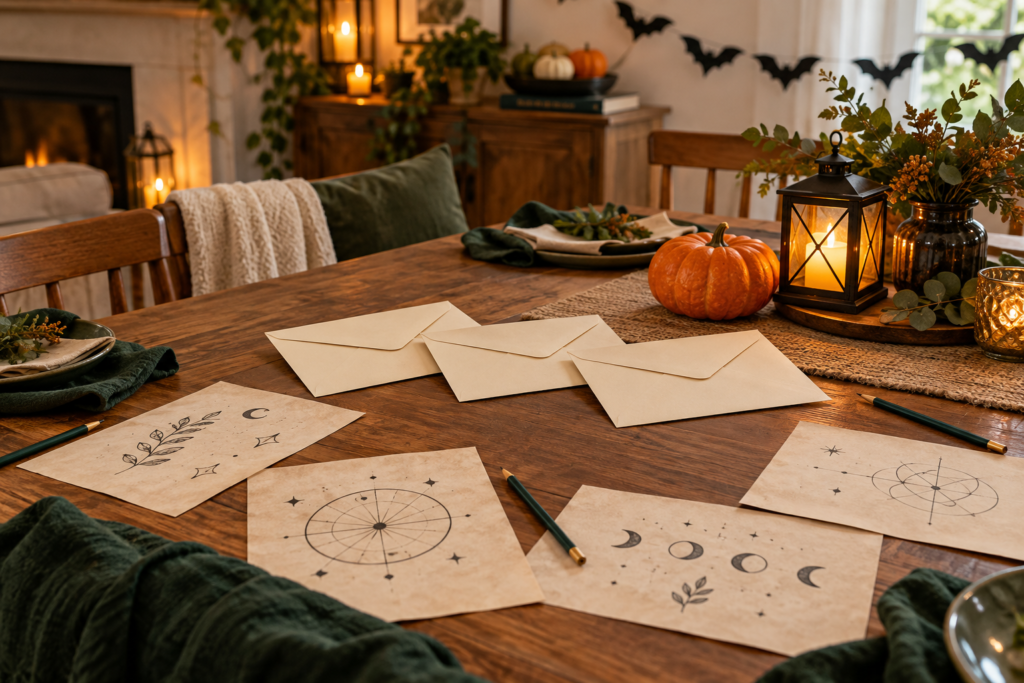
A Halloween adventure party at home gives guests a shared mission instead of a long list of unrelated games. They read a story, work through clues and reach an ending together. You can build that experience around a dining table, without hiring a venue or filling every room with decorations.
This guide is for a small group of teens and adults in the US or Canada. It explains how to choose a format, prepare the table, manage hints and keep the evening comfortable. For younger guests, start with our Halloween party ideas for families.
When should you host your Halloween party?
Halloween falls on Saturday, October 31, 2026, according to Time and Date. Choose an afternoon or evening that suits your guests, and include a finish time in the invitation. If people also plan to attend a public event, check its actual schedule before arranging your game night.
Quick comparison: choose your adventure format
Start with the space, ages and preparation time you have. These are planning choices, not scored product rankings.
1. Choose the story for your guests
Best for: Avoiding a game that feels too difficult or too frightening. Check the suggested age, language and player count before choosing a theme. Ask whether guests enjoy spooky fiction. A deserted station can suit teens who like mysteries; a friendly picture hunt is a better starting point for small children.
| Format | Best for | Preparation | Main limitation |
|---|---|---|---|
| Tabletop puzzle story | A small seated group | Print and sort pages | Needs readable clues |
| Picture treasure hunt | Younger children with adults | Check a route and hide cards | Needs supervision and space |
| Homemade mystery | Hosts who enjoy creating clues | Write and check each answer | More work before the party |
Decide whether everyone will cooperate or play in teams. Cooperation is a useful choice when guests have different puzzle experience. A suggested age is guidance, so also consider reading confidence and comfort with the story.
2. Prepare a clear, comfortable play area
You need: A table, readable lighting, pencils and enough space to share the clues. Put drinks away from printed pages. Keep walkways clear and use battery-powered decorations. A dark room may look atmospheric, but guests still need to read small details comfortably.
Choose two colours and one decorative focal point. A pumpkin and a simple paper sign can establish the theme. Spend preparation time checking the game instructions before adding extra props.
A ready-made puzzle story gives the evening a clear direction. Choose one with a readable opening, clues, hints and a proper ending. Look for an adventure whose suggested age and group size match your guests, then check its setup needs before planning the evening around it.
Turn the story into a party experience with a short welcome briefing. Tell guests what they are trying to discover and where they should write their answers. Keep the story introduction separate from instructions, so players understand both the mission and the rules before starting.
Hosting benefit: One shared mission gives guests something to discuss and a reason to work together. Watch for: A puzzle that relies on knowledge your guests do not have. Choose clear instructions and an available hint system instead of judging a game by its cover alone.
Keep the theme consistent across the invitation, table and story. A short welcome message such as “Tonight, our team has one mystery to solve” is enough. Guests do not need elaborate costumes or a room full of props to join in.
4. Keep player pages and host answers separate
Read the game guide before printing. Choose the file that matches your paper size, print a test page and make sure important symbols are clear. Check which pages belong to players and which contain hints or answers. Sort the two sets before guests arrive.
Put host material in a separate folder so nobody sees the ending early. Keep pencils beside a shared note sheet. If your adventure needs hidden clues, check each hiding place and make a private location list. Follow the chosen game’s instructions rather than assuming every printable uses the same setup.
Before guests arrive: Place player materials in order, set aside the answer guide and check the seating. Tell guests whether the game includes scary themes, and let them choose how much they want to participate.
5. Give everyone a useful role
Let one guest read the opening, another record answers and others inspect the clues. Rotate roles so the fastest reader does not control every decision. Encourage players to explain how they reached an answer before writing it down.
Offer hints as help, rather than a punishment. Start with the smallest hint available. If someone wants a break, keep their seat open and explain where the group has reached when they return.
Small detail that helps: Use one shared note sheet for discoveries. Ask players to label each answer, rather than writing a string of unexplained numbers. This makes the final check easier and gives quieter guests a useful role.
A flexible two-hour running order
This is a suggested party schedule, not a promised game duration. Adjust it to your group.
| Party stage | Suggested allowance | Host task |
|---|---|---|
| Arrival and briefing | 20 minutes | Explain the story and rules |
| Adventure | 60 minutes | Support players and allow breaks |
| Food and conversation | 25 minutes | Discuss favourite moments |
| Ending and goodbye | 15 minutes | Finish calmly and collect supplies |
Common challenges and simple fixes
The group gets stuck: Ask what the clue actually says, then offer one hint. One person dominates: Rotate the reader and recorder. Guests finish early: Invite them to create a different story ending. Time runs short: Offer clearer help and leave room for the ending instead of rushing every page.
After the party: save what helped
Note which parts needed explanation, what supplies were useful and whether the group wanted a gentler theme. Ask before sharing photos, and keep puzzle solutions out of public posts. Save reusable decorations. Browse our events and celebration guides when planning your next gathering.
Frequently asked questions
Do you need to lock a room?
No. A tabletop adventure uses a story and puzzles. Guests should be able to leave the play area whenever they want.
Can younger children join a Halloween adventure party?
Match the activity to the youngest guest’s reading skills and comfort level. For young children, choose picture clues and a gentle story, with adult supervision. Keep stronger horror themes for groups who agree to them.
How long will the adventure take?
Allow a flexible activity slot rather than promising a precise finish. Reading speed, discussion and hints change the duration. Leave time for food, a break and the story ending.
How much decoration does the party need?
Use decorations to support the story, not to crowd the play area. A pumpkin, a paper sign and soft battery-powered lighting can establish a theme. Keep enough light for everyone to read and move comfortably.
Can you play again with the same group?
You can revisit the story, but the puzzle answers stay the same. Choose a new adventure if your group wants fresh discoveries.
Keep the mission simple
Choose a story your guests will enjoy, prepare the pages and give everyone a voice. A clear plan and a satisfying ending matter more than an expensive room makeover.
Restonya Editorial
Practical event guides with clear preparation steps and honest product details. Read our editorial policy.
Events. Ideas. Moments worth sharing.
© Restonya. Event information can change. Confirm dates, availability, and entry requirements with the official organizer.