
10 Halloween Party Games for Teens Indoors: Easy Rules and Low-Cost Ideas
By Restonya Editorial · October 11, 2026 · 6 min read
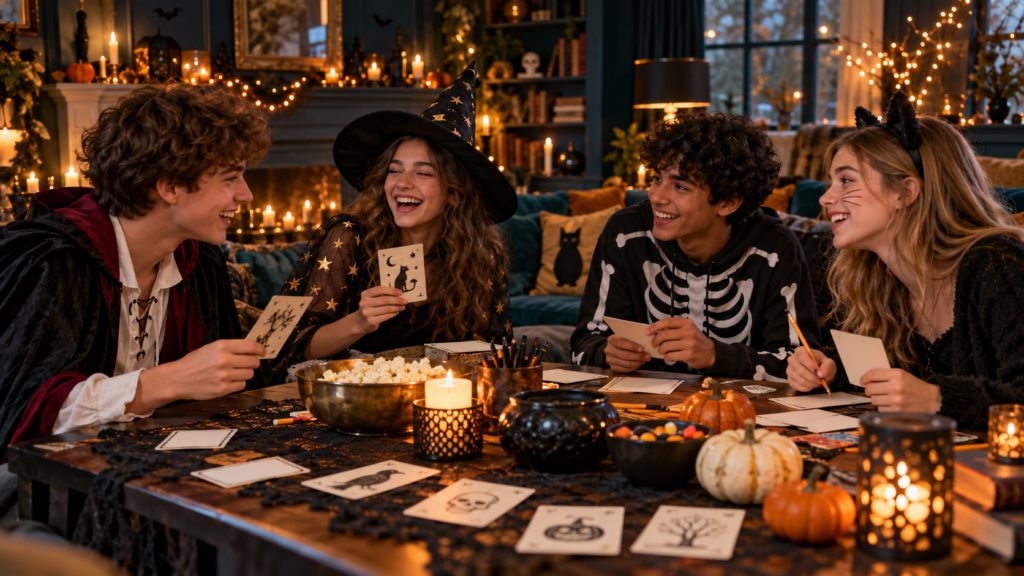
Halloween party concept scene. Props shown are not included with the Etsy digital download.
An indoor Halloween party does not need an expensive room makeover. A few well-chosen games can give friends something to do, help quieter guests join in, and keep the evening moving. The trick is to choose activities that suit your group rather than filling every minute with a competition.
These Halloween party games for teens indoors include quick warm-ups, creative challenges, and a longer mystery option. The timings below are planning estimates. Try the setup before guests arrive and adjust the difficulty for their ages and interests.
Start with three games, not all ten
Pick one easy arrival game, one main activity, and one flexible game for after food. Ask guests whether they prefer puzzles, acting, or team challenges.
For a wider celebration plan, see our Halloween party ideas for families. This guide focuses on games for a teen group rather than the whole family party.
| Game | Suggested group | Allow | Main supplies |
|---|---|---|---|
| Mystery object sketches | 4–12 | 10 minutes | Paper and pencils |
| Spooky story chain | 4–10 | 10 minutes | Prompt cards |
| Secret character interviews | 6–12 | 15 minutes | Character slips |
| Printable mystery adventure | 1–6 | Follow game guidance | Printed game and pencils |
| Halloween sound detective | 4–12 | 10 minutes | Prepared sound clips |
| Haunted museum challenge | 4–12 | 15 minutes | Safe household props |
| Pumpkin token toss | 4–12 | 10 minutes | Paper tokens and bowls |
| Costume detail detective | 4–12 | 10 minutes | Paper and pencils |
| Silent monster scenes | 4–12 | 15 minutes | Prompt cards |
| The missing party invitation | 4–10 | 20 minutes | Homemade clues |
1. Mystery object sketches
Put a safe object, such as a spoon or toy pumpkin, inside an opaque bag. One player looks inside and describes its shape without naming it. Everyone else draws what they hear for one minute.
Reveal the object and compare the sketches. Avoid sharp objects, breakable items, and anything guests must touch without seeing.
2. Spooky story chain
Start with a simple sentence: “The doorbell rang, but nobody was outside.” Each guest adds one sentence to the story. After two rounds, the last person must bring it to an ending.
Agree on the tone first: funny, mysterious, or mildly spooky. Skip graphic descriptions and personal jokes. A host can offer a prompt if someone gets stuck, or let that guest pass without losing points.
3. Secret character interviews
Write fictional character roles on slips: a nervous ghost, a lost vampire, or a detective who dislikes the dark. Players take turns answering three questions while staying in character.
The group guesses the role after the interview. Questions might include “Why did you come to this party?” and “What is in your bag?” Keep rounds short and use invented characters rather than impersonating classmates.
4. Play a printable mystery adventure
A prepared puzzle game works well when your group wants one connected story instead of several short rounds. Clear a table, prepare the pages, and assign a reader, note-taker, and clue checker. Change roles during play so one confident guest does not take over.
Our The Midnight Visitor printable Halloween mystery game on Etsy is a paid digital download from our own shop, NexoraHubDigital. It is designed for ages 12+ and one to six players. Read the listing for its current contents and requirements before buying. This is an optional purchase; the other activities here can be prepared at home.
Want to make the room part of the story? Our Halloween adventure party at home guide explains how to organise a themed evening.
5. Halloween sound detective
Prepare short sounds such as footsteps, a creaking door, or paper rustling. Play each sound once and ask teams to write their guesses. Reveal the answers after five rounds.
Use comfortable volume and avoid sudden loud effects. Offer a visual guessing round for guests who cannot hear the clips clearly. You can record your own household sounds rather than relying on a paid app.
6. Haunted museum challenge
Give each team three harmless objects and five minutes to invent a museum display. A wooden spoon might become a vanished chef’s wand; an empty box could hold an invisible treasure.
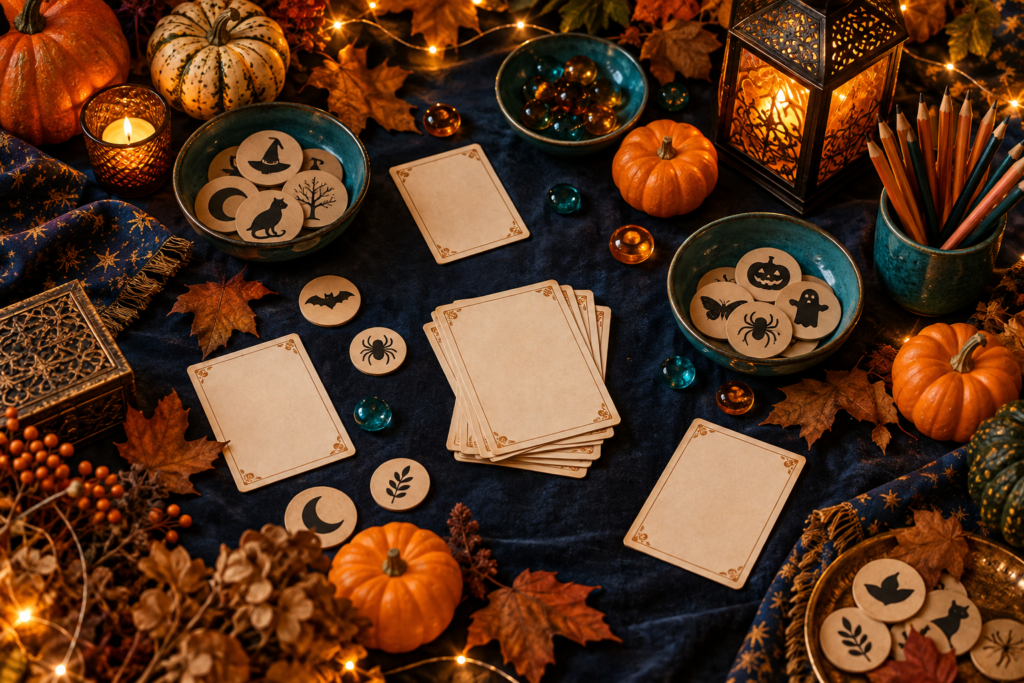
Teams present their display in one minute. Award separate points for story, teamwork, and clever use of props. Nobody needs to buy decorations. Keep walkways clear and return borrowed household items afterward.
7. Pumpkin token toss
Make orange paper tokens and place three bowls on a table. Give each bowl a different score. Players toss from a marked spot, with five attempts each.
Test the distance before starting. Move the line closer when the game is too difficult, and let guests play seated if they prefer. Use lightweight supplies and place the table away from glass, drinks, and electronics.
8. Costume detail detective
One volunteer stands where everyone can see them for twenty seconds. They leave the room while the host asks five questions about visible costume details.
Keep questions about clothing and accessories, not bodies or appearance. Guests without costumes can hold a few props instead. Everyone writes answers privately before the reveal, which gives quieter players a fair chance.
9. Silent monster scenes
Prepare scene cards such as “a ghost trying to catch a bus” or “a werewolf ordering pizza.” Pairs act without speaking while other guests guess the scene.
Allow ninety seconds per round. Give one point for the character and one for the action. Offer a drawing version for anyone who dislikes acting. Avoid tasks that involve climbing furniture or making physical contact.
10. The missing party invitation
Create four connected clues leading to a final invitation. A simple letter swap, a picture pattern, and a short riddle are enough. Keep every clue inside the agreed play area.
Test the answers beforehand and prepare one hint per clue. Tell guests which drawers and rooms are off limits. The final message can announce dessert or the next game instead of requiring a purchased prize.
A simple evening schedule
Allow ten minutes for arrivals, fifteen for a warm-up, and a flexible block for the main activity. Serve food before guests become tired, then offer a short optional game. If using a purchased mystery, follow its guidance rather than forcing it into a fixed time slot.
Use LED lights, keep exits clear, and check food allergies with guests. Take photos only with permission. After the party, ask which activity they would play again; that feedback is more useful than trying to run every game.
Frequently asked questions
What are good indoor Halloween games for a small teen group?
Story chains, sound guessing, and a tabletop mystery suit small groups because they need little space. Pick an activity where everyone has a role.
Can we play without buying supplies?
Yes. Several ideas use paper, pencils, bowls, or safe objects you already own. The Etsy mystery is optional and is not needed for the homemade games.
How do I keep Halloween games from feeling childish?
Let teens choose the theme and add a clear challenge. Give them room to make decisions, and avoid embarrassing forfeits or compulsory performances.
What if some guests do not enjoy scary games?
Keep the theme funny or mysterious. Explain the activity before starting, allow people to pass, and avoid surprise scares. A comfortable group is more likely to enjoy the evening.
Restonya Editorial
Practical celebration ideas. Our editorial approach